Fakes that I have found online
(So far)
The world of tsuba collecting is plagued by deliberate fakes, and unintentional mischaracterisations of modern pieces.
One of the key tools a new collector can use is a reverse image search to see if an identical tsuba pops up on a site somewhere else, either described as modern, or in a context that makes it clear that it is a modern one.
Not all tsuba that have identical twins are modern or fake, many genuine antique tsuba were also produced at scale to be sold to a hungry local or export market. However, it is often a good start to check to see if others are around that have different colours, or obvious flaws.
The tsuba pictured below are all ones that other collectors or I have found in various auction sites, and, in our opinion are modern rather than antique. They are usually described as “Edo period” or “antique”. Often this is not deliberate fraud, but is a result of ignorance or a lack of checks by the auction houses where they are being sold.
Many of these pictures are screenshots from various auction and dealer websites, and not ones that I have personally purchased.
(I should note that many of these have been found by the good folk over on the Nihonto Message Board, a great community to ask for help if you are considering collecting tsuba or nihonto).
*Note: I do not claim that the sellers know that these are modern, they can be fooled too, but buyers should be very careful before making a purchase.
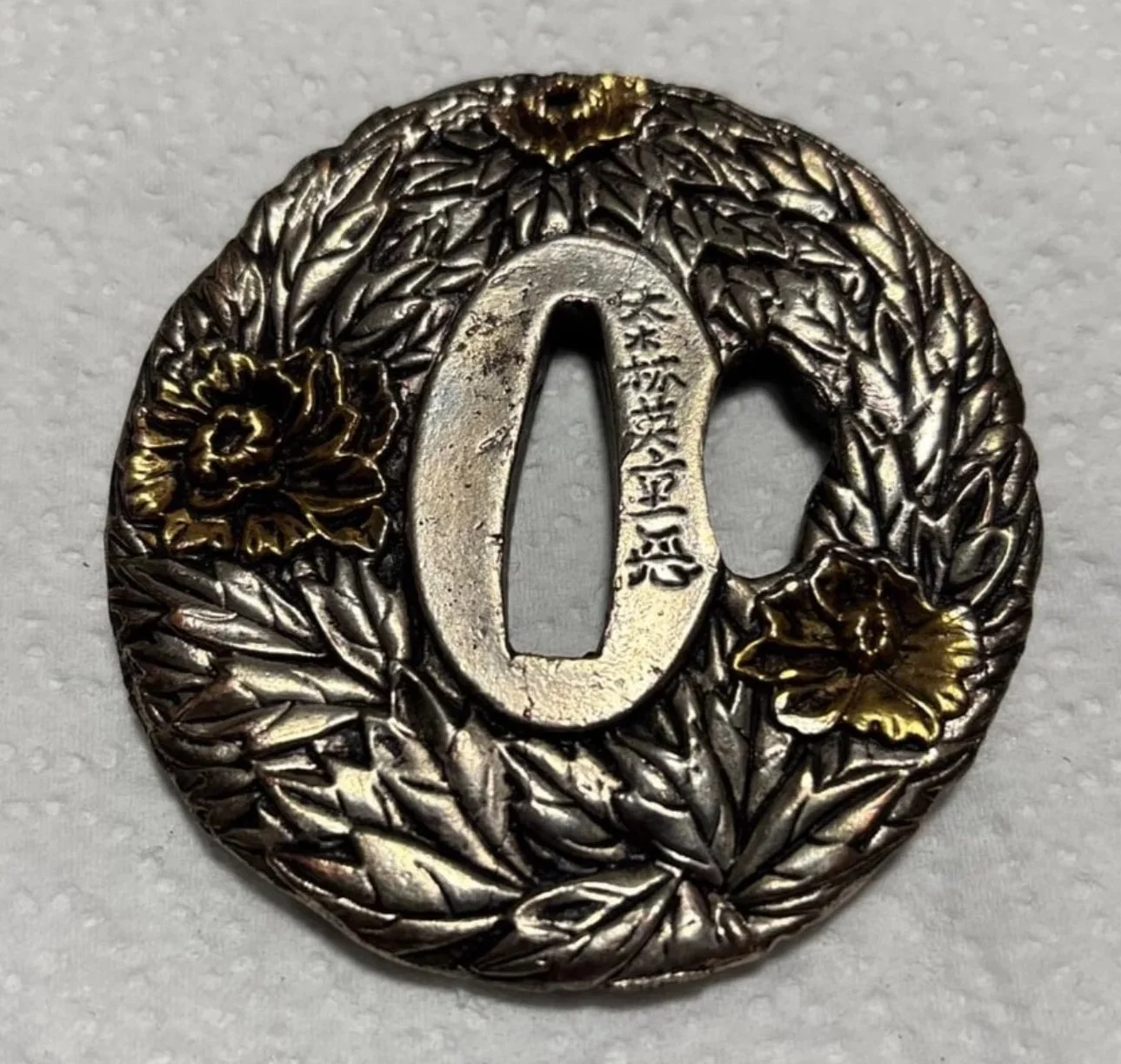
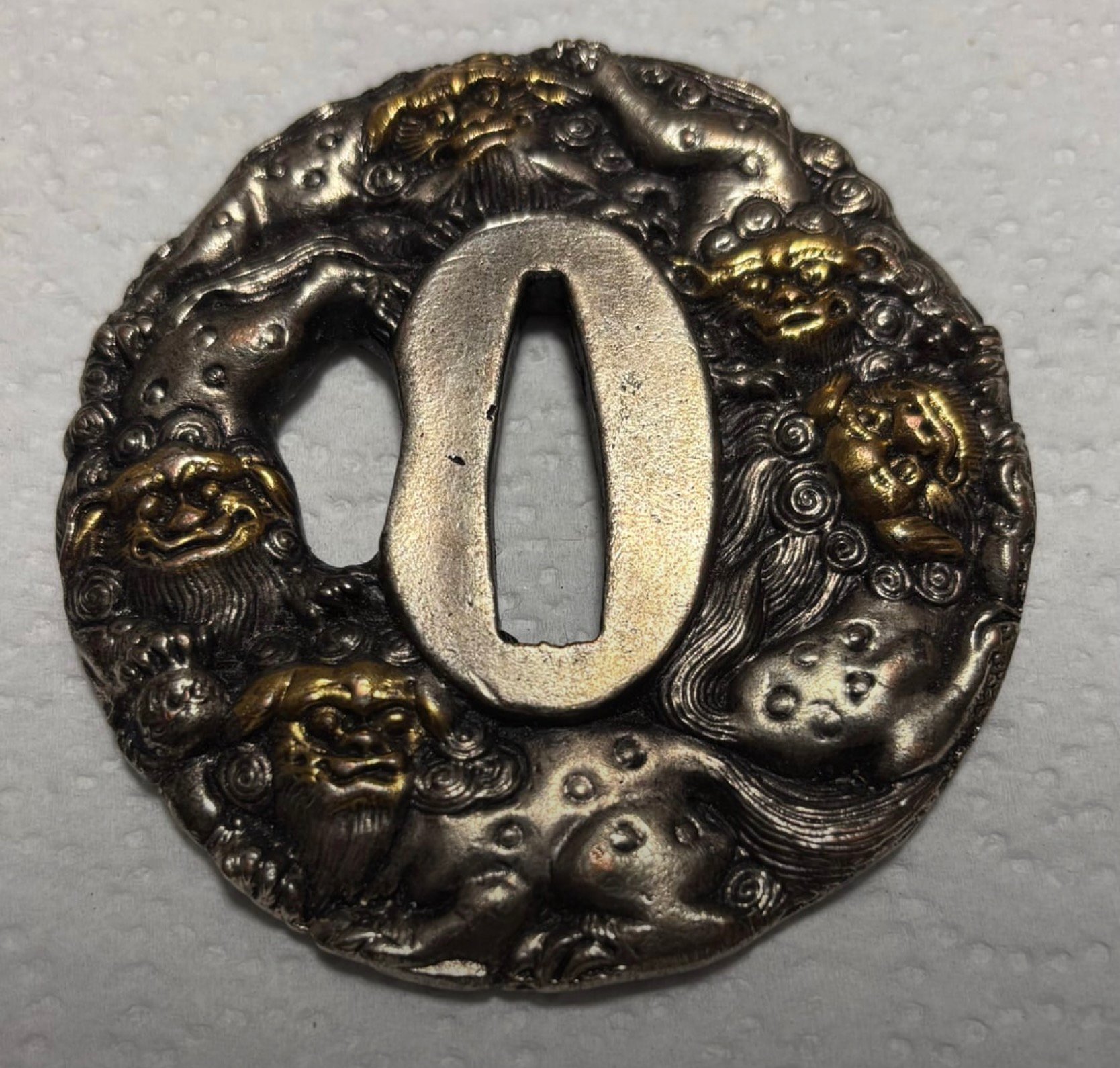
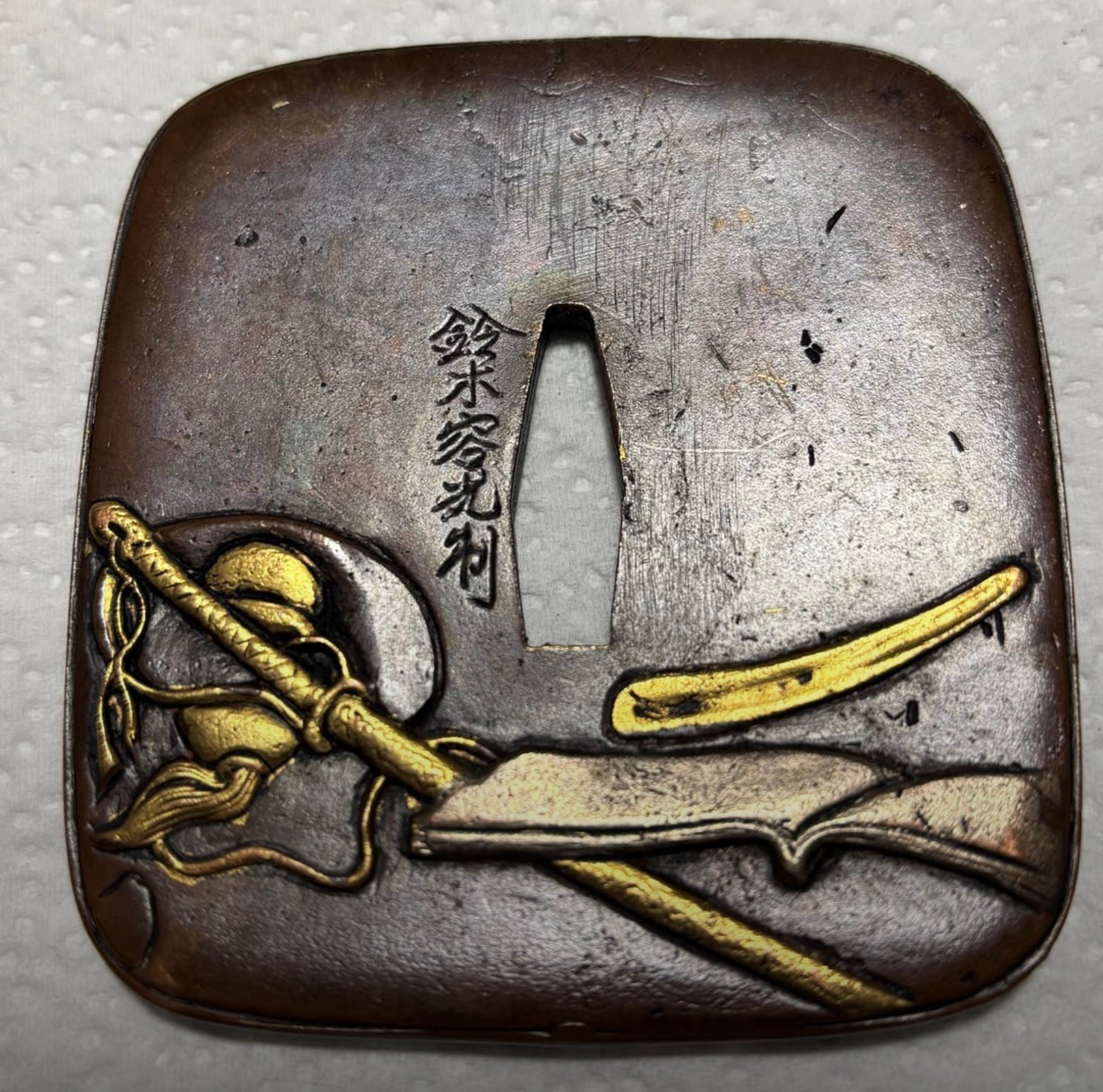
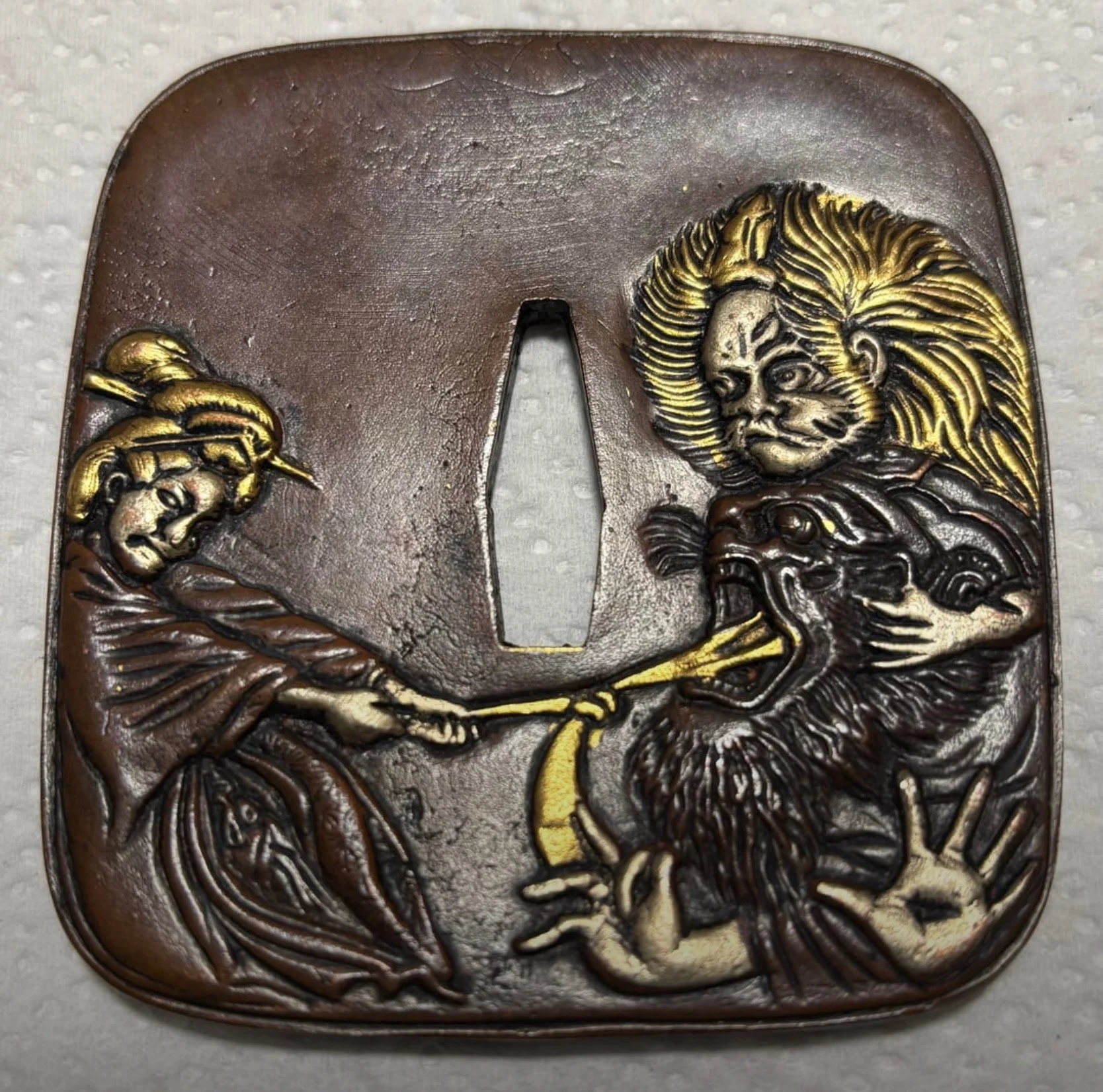
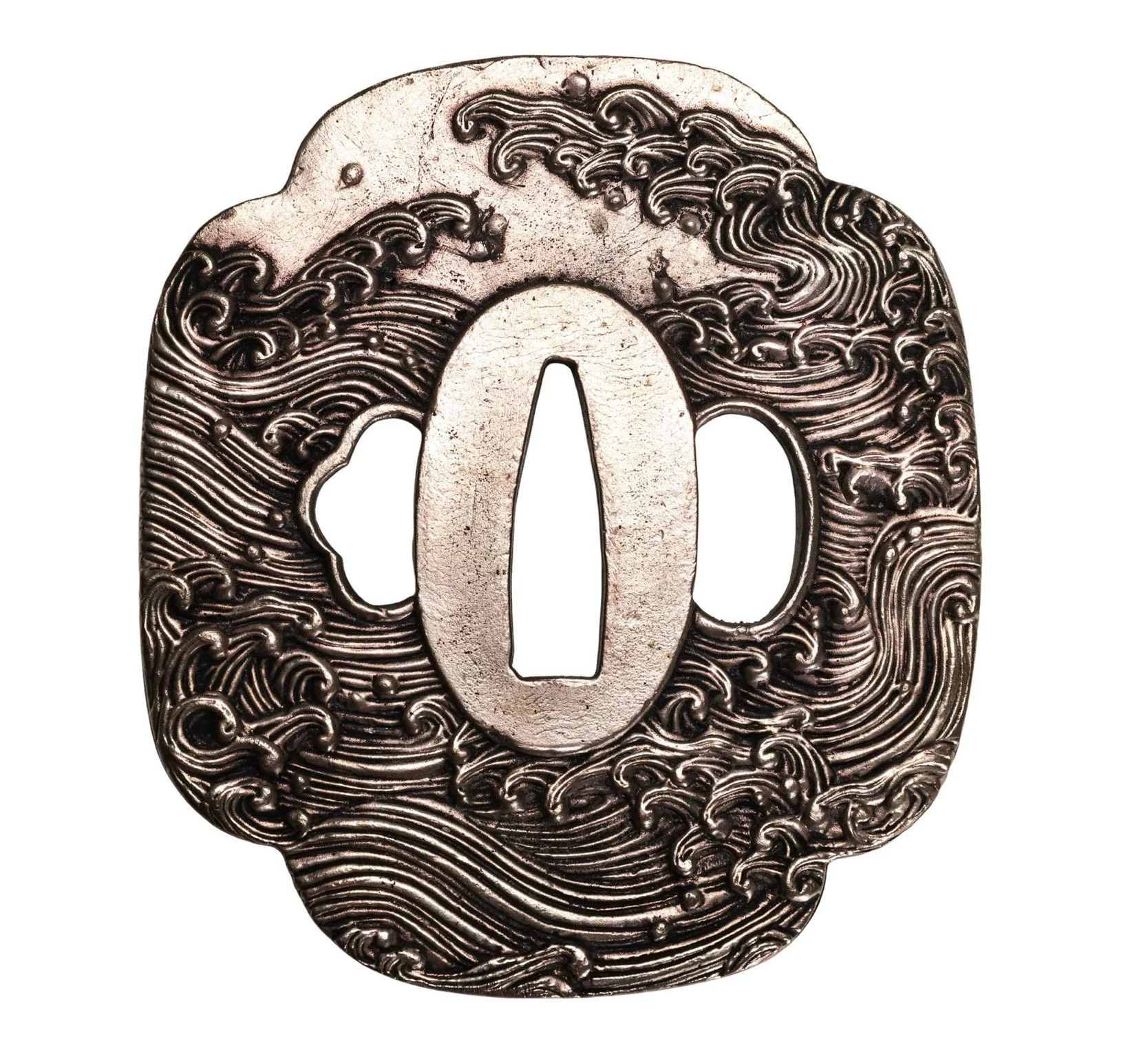
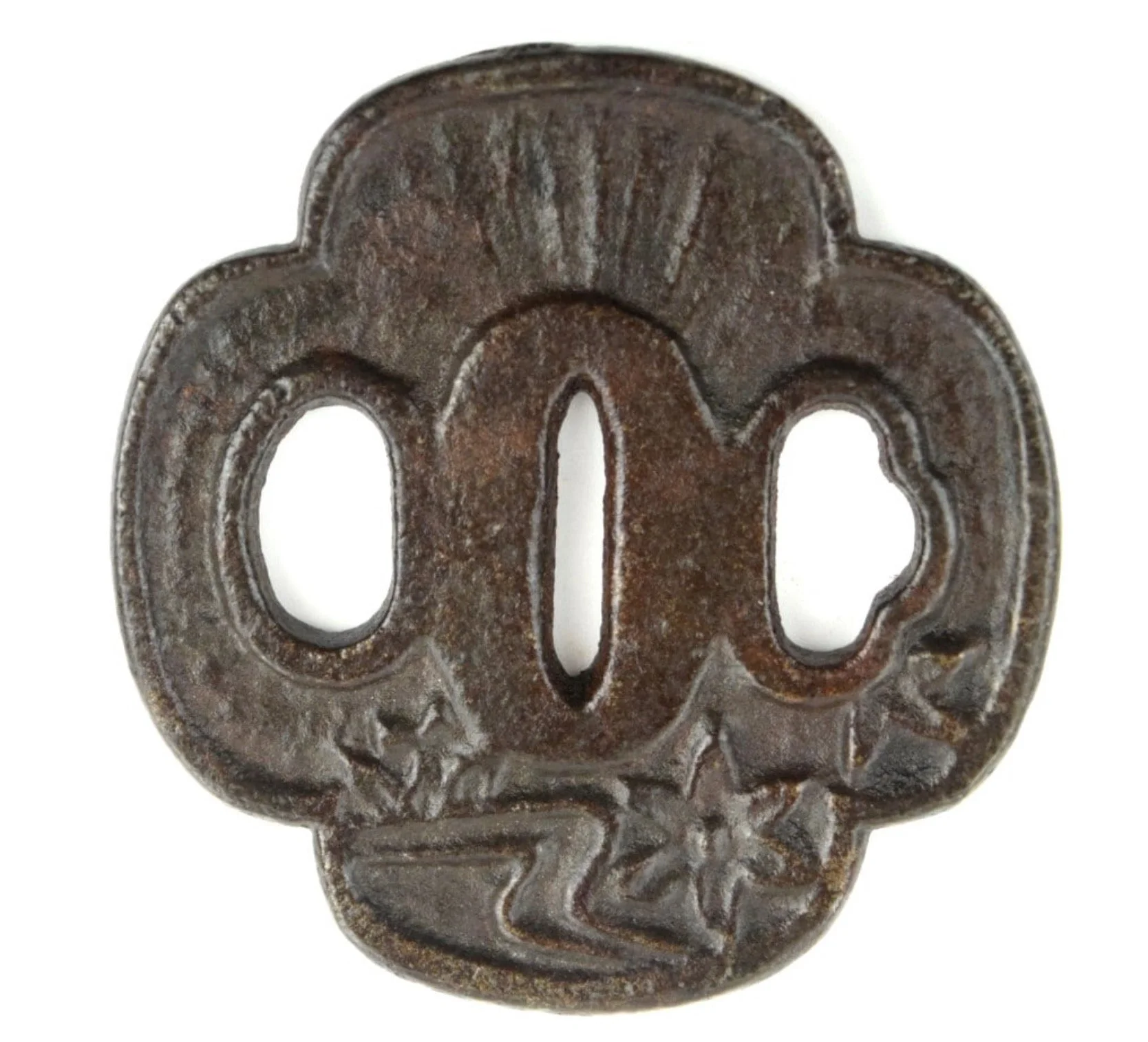
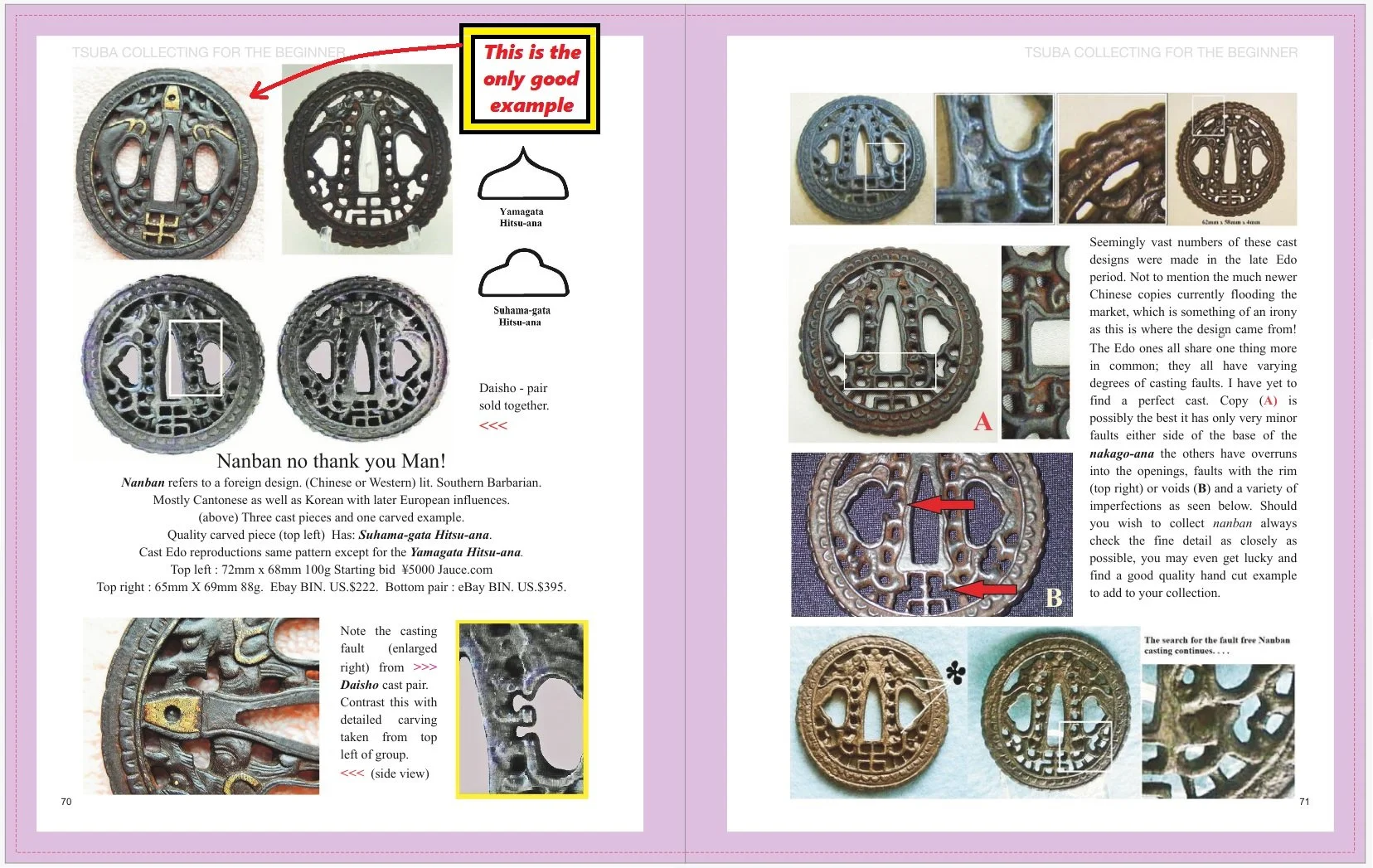
Described as “Edo period” this shows obvious signs of modern manufacture.
These include “soft” lines on the decoration, an uneven seppadai, and unconvincing mei
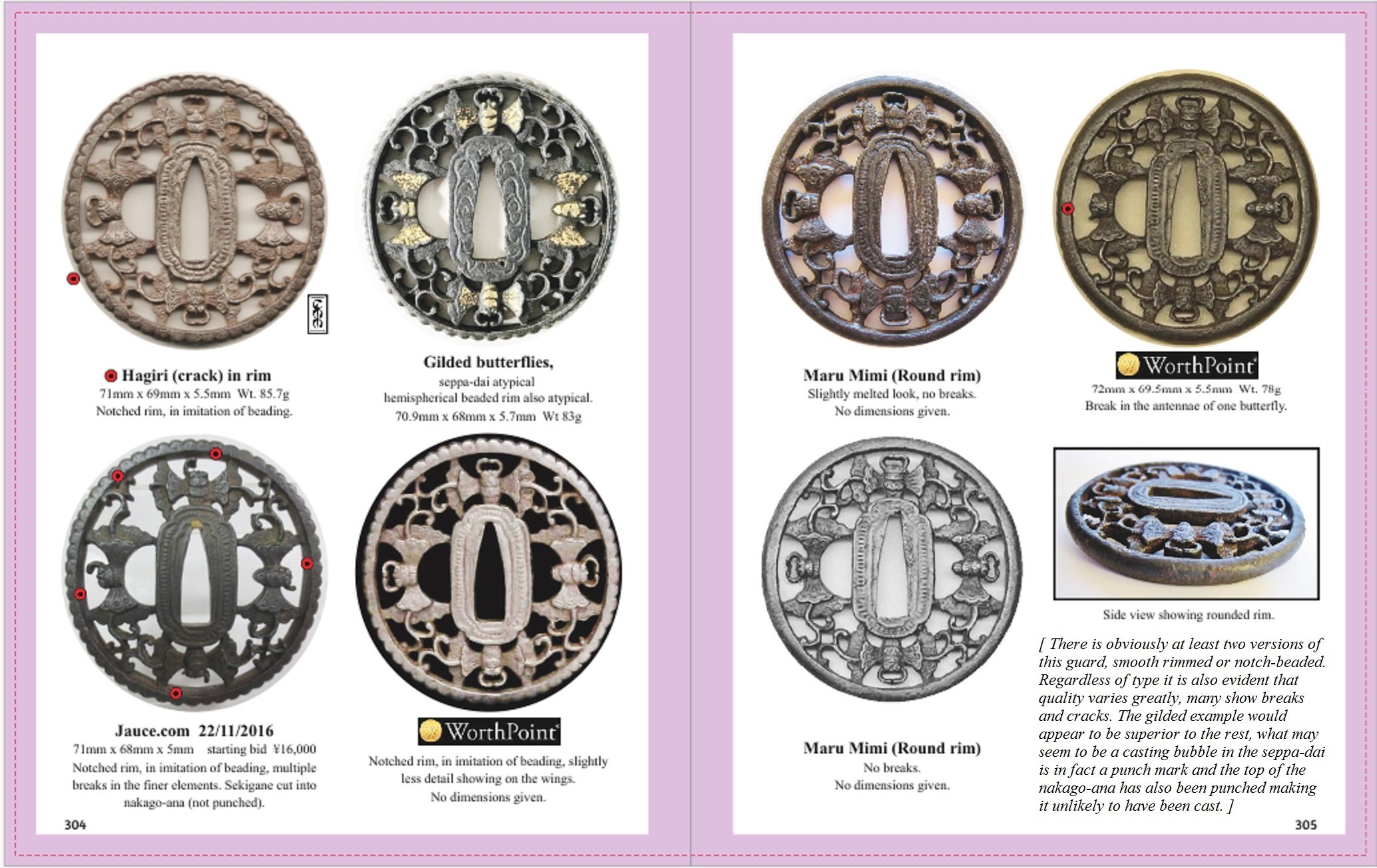
Too many versions of this of varying qualities online. Most often being marketed as “antique”.
See the gallery at the bottom of the page for a more detailed discussion of this design.
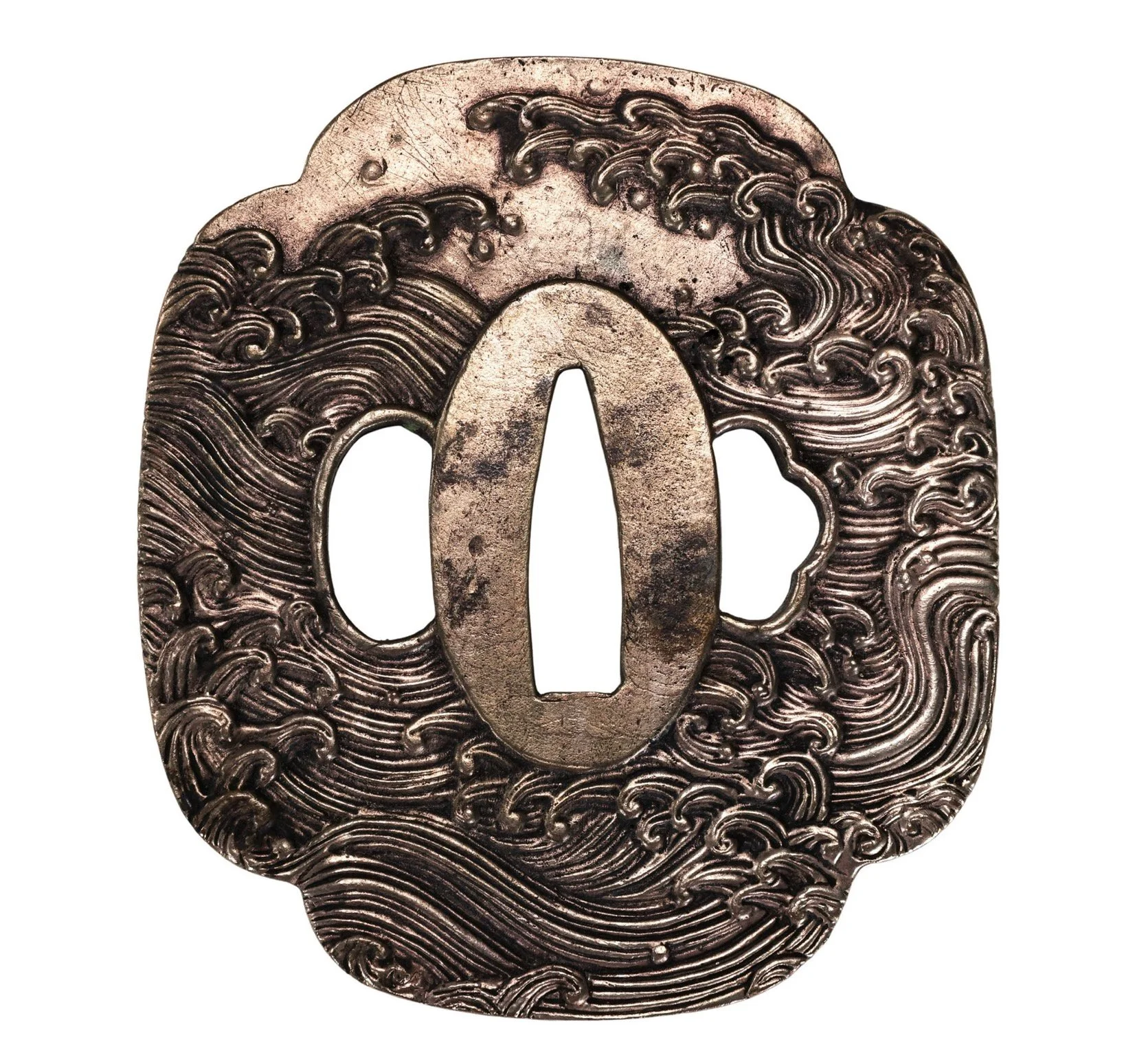
Described as “Edo period” this shows obvious signs of modern manufacture.
These include “soft” lines on the decoration, and casting marks on the waves and seppadai.
You can find an accurately described version of this one here.
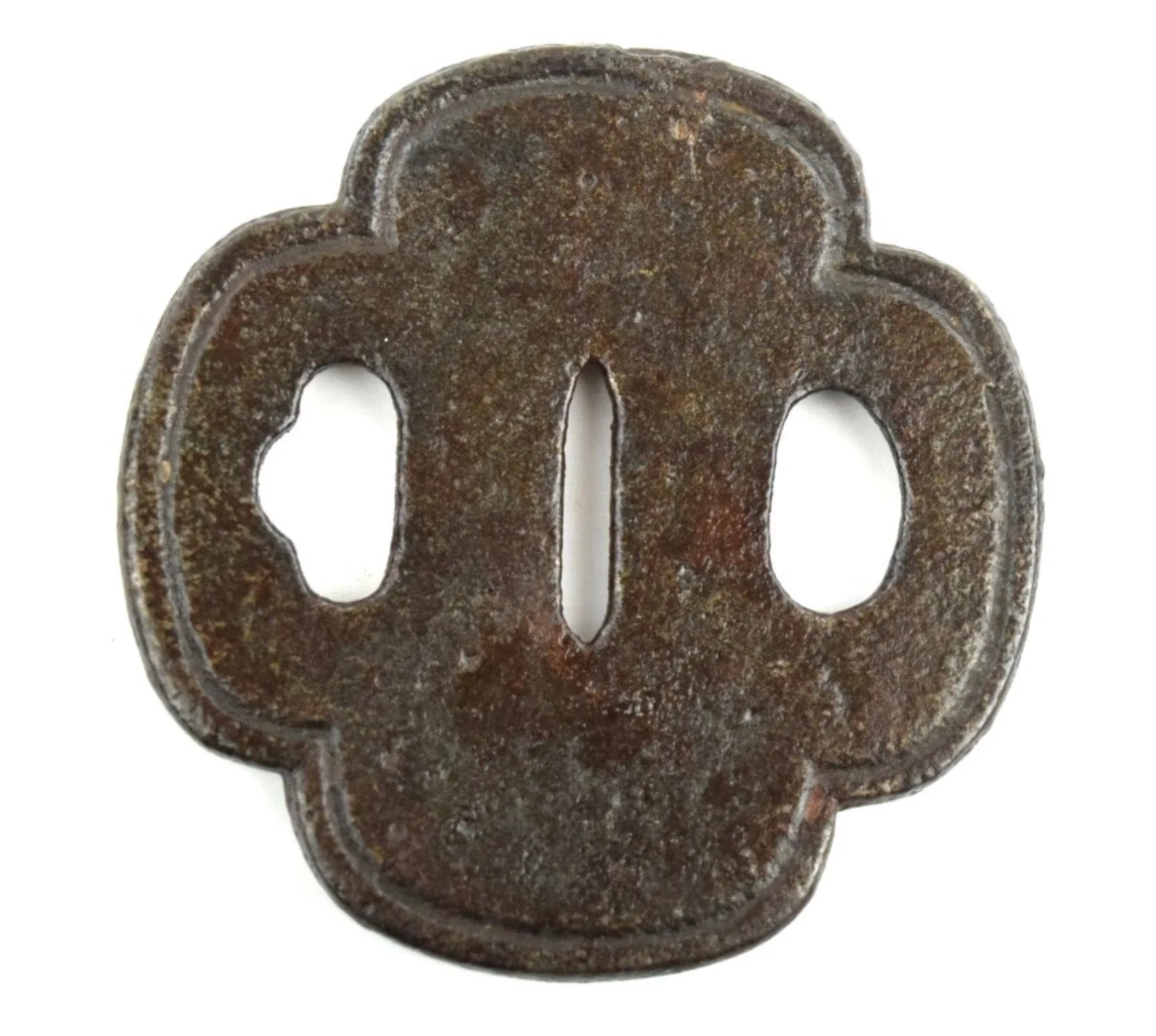
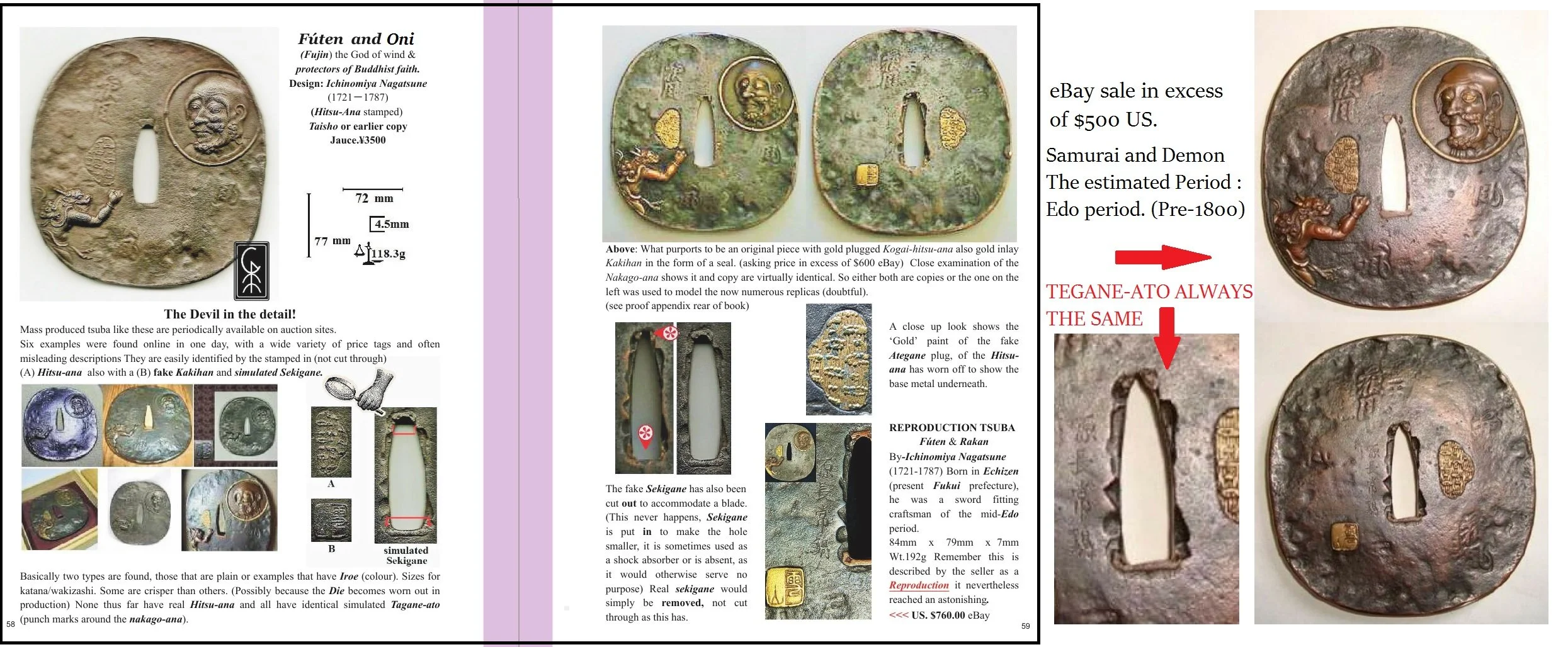
Described as “Edo period” this shows obvious signs of modern manufacture.
These include a misshapen nakago ana, dreadful carving, and obvious casting marks.
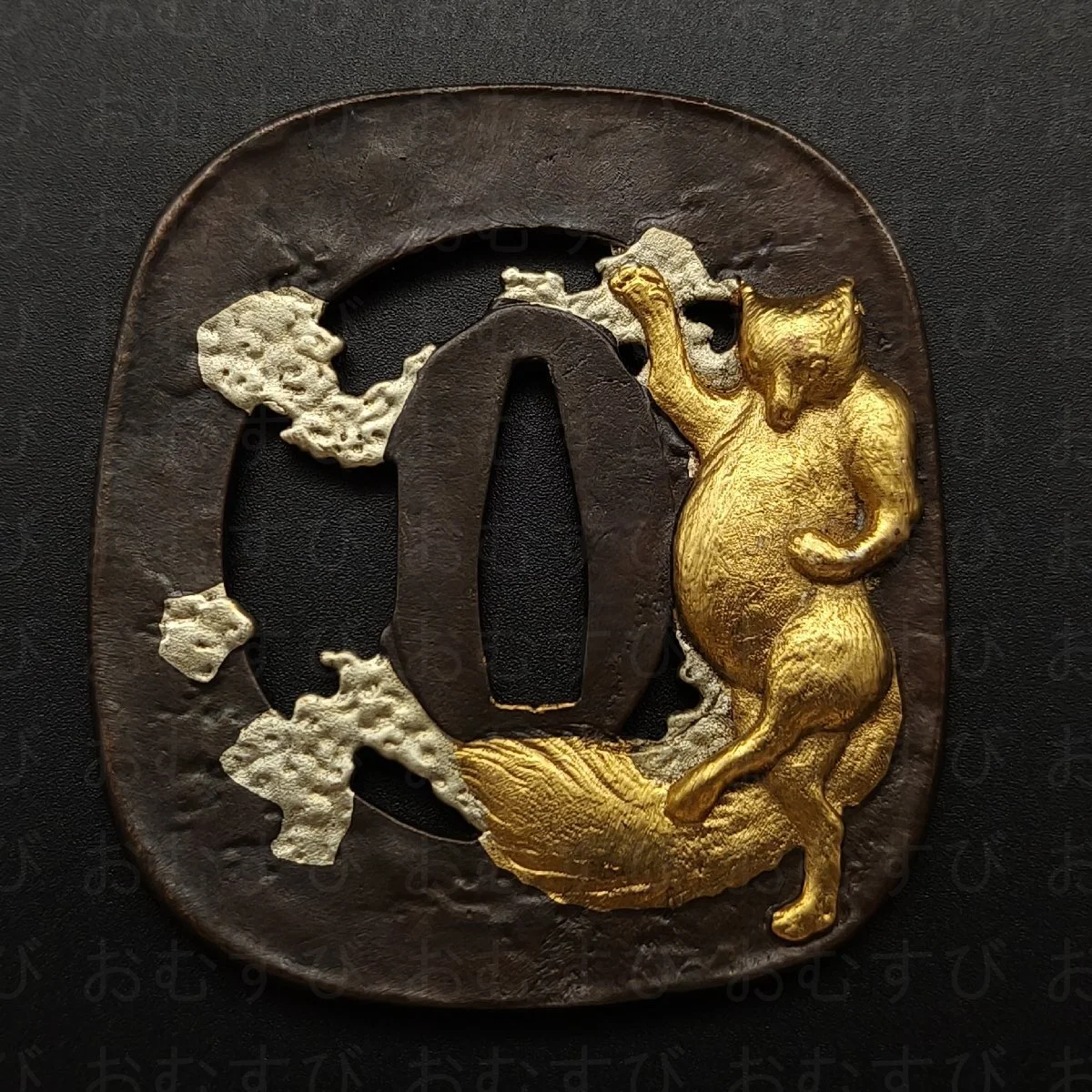
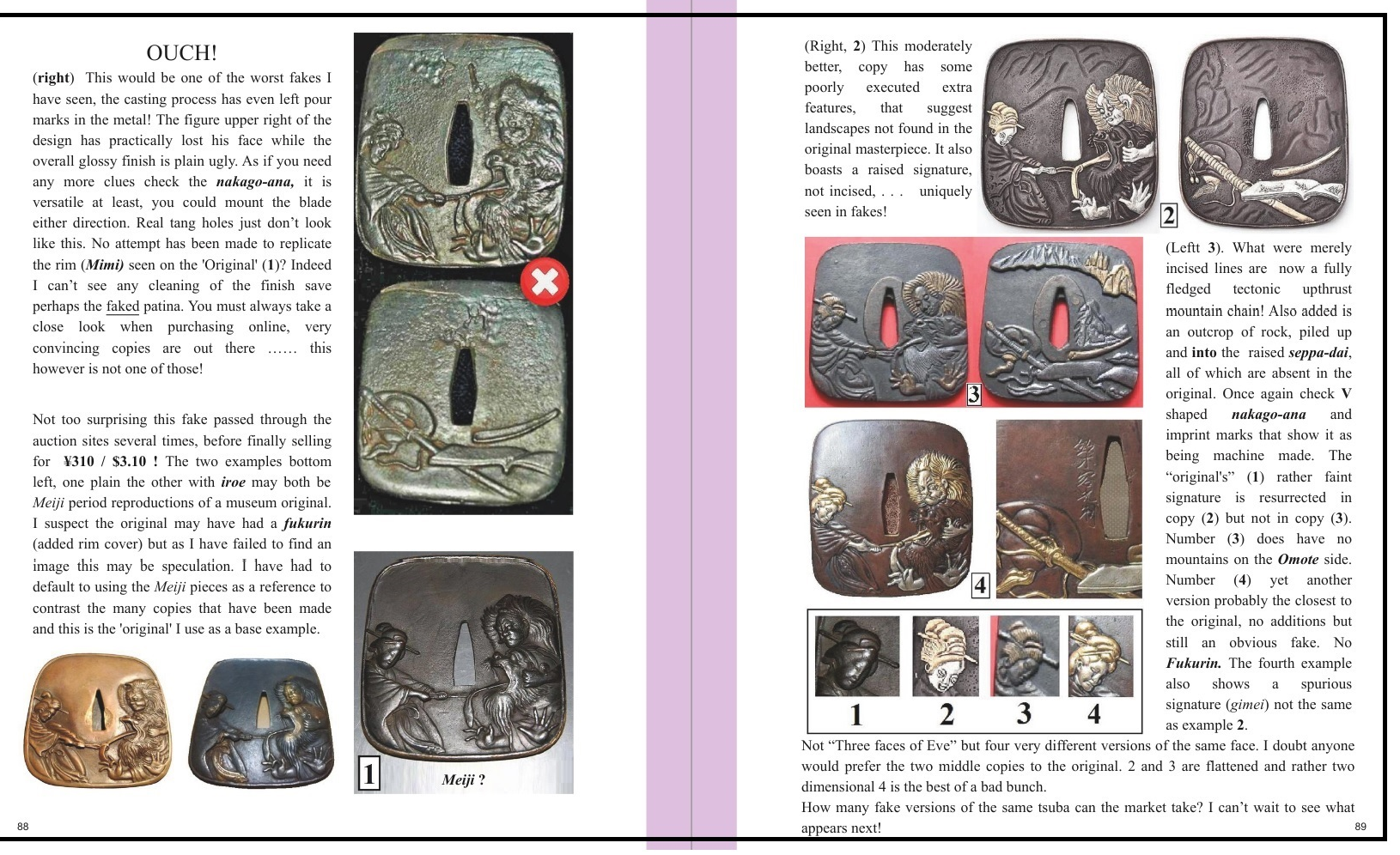
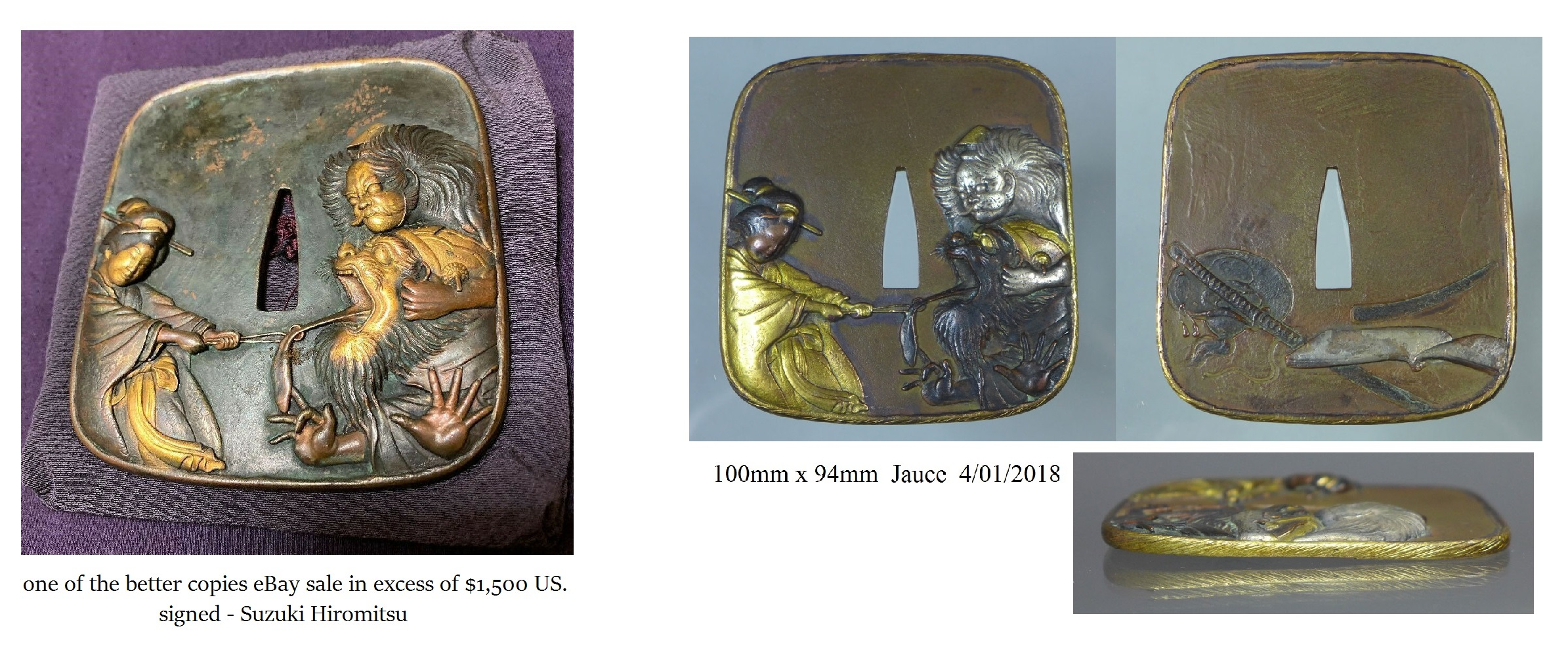
This tanuki tsuba is one that keeps cropping up in various forms (see below).
Some are more convincing than others, so be very wary if you see one with this design being offered.

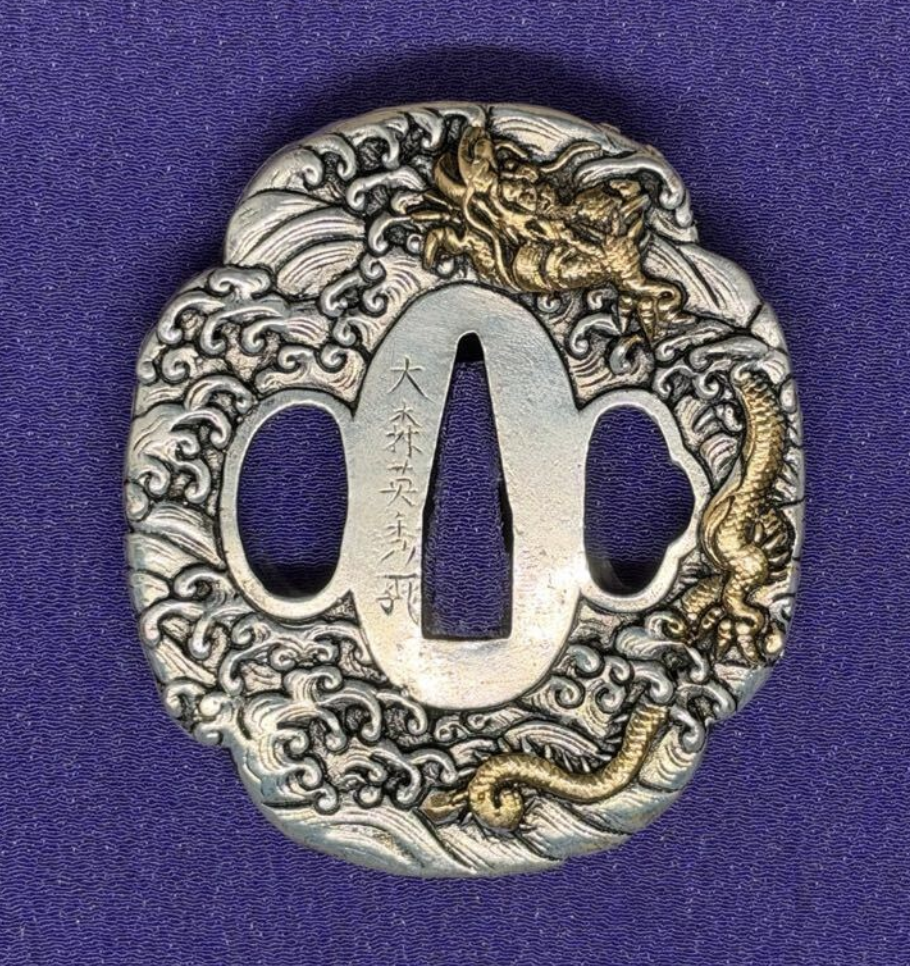
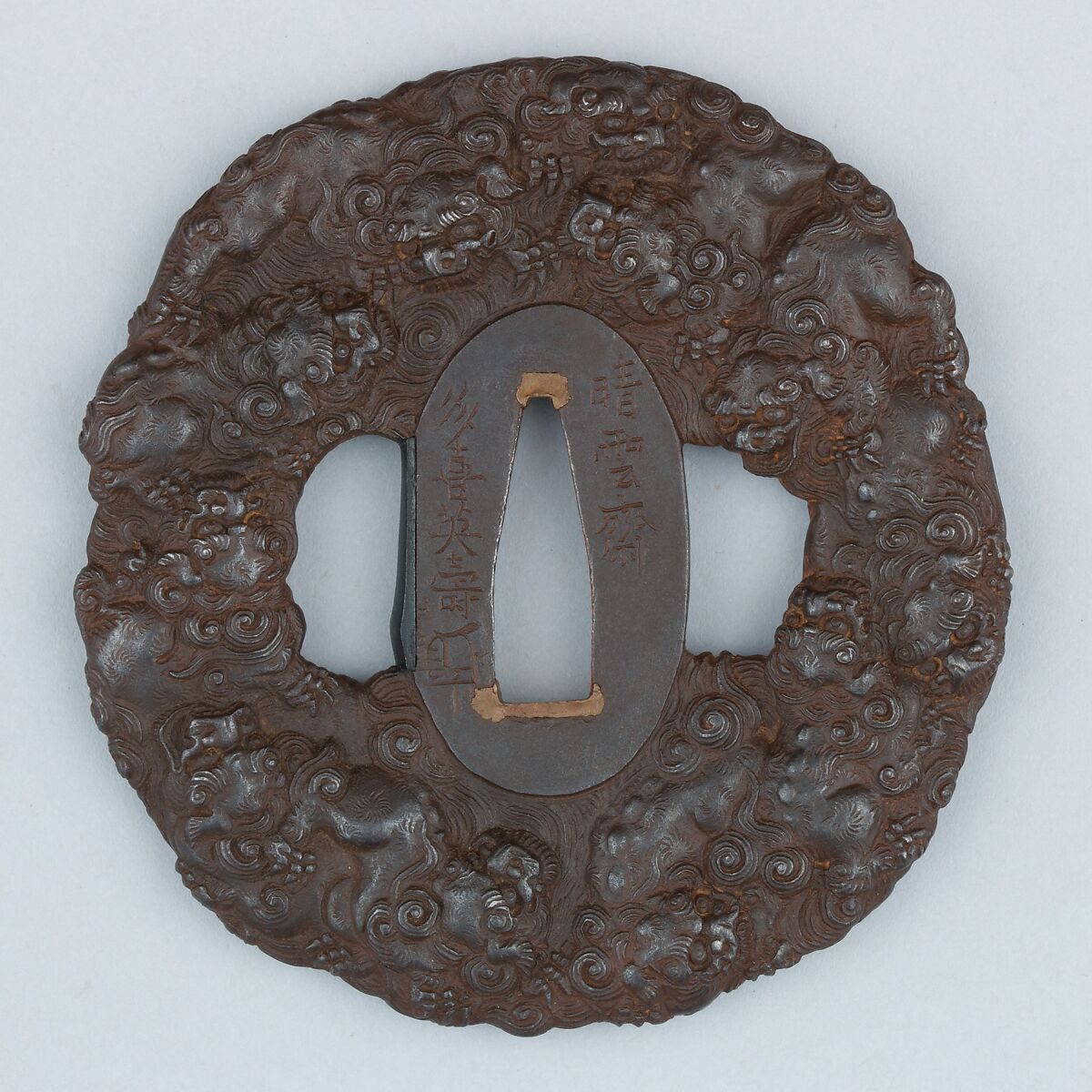
Described as “Hidehide Omori Tsuba (sword guard) with dragon design”.
Shows obvious signs of being a modern copy. Casting marks can be seen in the waves and on the seppadai.
Another version can be found here (not being sold as an antique).
The quality of the carving is definitely not up to the Omori standard. See here for an example of his work from the Met.
Published guides
I am indebted to Dale Raisbeck for the book pages shared below. The copyright remains with him, and these are shared with permission.